Integrated GRC in ERP: From Compliance Obligation to Strategic Imperative

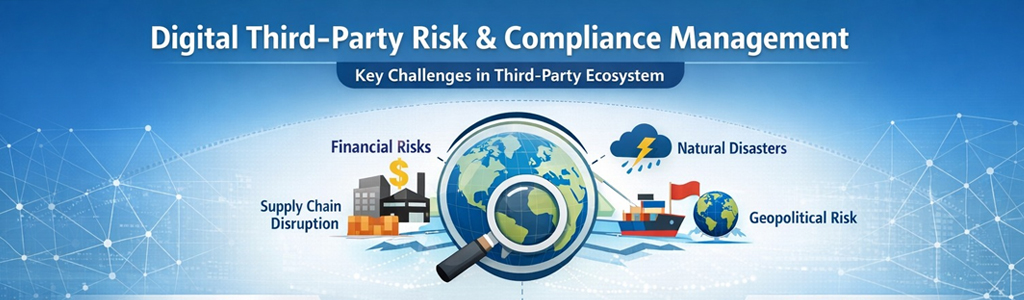
Integrated Governance, Risk, and Compliance (GRC) embedded within ERP system digital architecture with real-time monitoring and control visualization

By Raghu Muniyappa

In an era where ERP systems define operational agility and financial integrity, embedding Governance, Risk, and Compliance (GRC) directly into the digital core is no longer optional — it is a strategic necessity. Organizations that fail to integrate GRC within ERP environments risk regulatory exposure, operational disruption, and erosion of stakeholder trust.


Enterprise Resource Planning (ERP) systems have evolved far beyond transactional back-office platforms. Today, they are the digital core of the enterprise — orchestrating finance, procurement, supply chain, HR, and operational data in real time.

But as ERP systems become more powerful, they also become the single greatest concentration of enterprise risk.

Across industries, one pattern is increasingly clear: organizations that treat Governance, Risk, and Compliance (GRC) as a parallel function — rather than an integrated capability within ERP — expose themselves to avoidable operational, financial, and regulatory risks.

The future belongs to enterprises that embed GRC directly into their ERP ecosystems.

ERP: The Centralization of Value — and Vulnerability

Modern ERP platforms consolidate authority, data, and decision-making power. A single user role can influence procurement approvals, vendor payments, financial postings, or payroll processing. A configuration change can impact compliance reporting. A privileged access assignment can open the door to fraud.

In this centralized environment, risk is systemic — not isolated.

Yet many organizations still rely on:

  • Periodic audits
  • Spreadsheet-based access reviews
  • Manual segregation of duties (SoD) checks
  • After-the-fact compliance validation

This model may have worked in static environments. It does not work in cloud-enabled, API-driven, continuously evolving ERP landscapes.

The Illusion of Control in Siloed GRC Models

Traditional GRC approaches often create an illusion of oversight. Reports are generated. Findings are documented. Remediation plans are tracked.

But the fundamental issue remains: risk is identified after exposure has already occurred.

Separating GRC from ERP operations results in:

  • Delayed detection of control violations
  • Inconsistent enforcement of policies
  • Limited real-time risk visibility
  • Heavy dependence on manual intervention

In a digital enterprise, delayed control is ineffective control.

Integrated GRC: Embedding Governance into the Digital Core

Integrated GRC means embedding governance, risk management, and compliance mechanisms directly into ERP workflows and system architecture.

This includes:

  • Real-time segregation of duties validation
  • Automated access provisioning with risk analysis
  • Continuous control monitoring
  • Embedded compliance checks within transactions
  • Policy-driven approval workflows
  • Executive dashboards with live risk insights

When GRC is integrated, prevention replaces detection.

The ERP system becomes capable of identifying and stopping violations before they materialize — not merely documenting them afterward.

Why the Urgency Now?

Three structural shifts are accelerating the need for integrated GRC.

1. Regulatory Expectations Are Continuous

Regulators increasingly expect ongoing compliance rather than periodic evidence. Whether under SOX, GDPR, or industry-specific frameworks, organizations must demonstrate traceable and sustainable control environments.

Integrated GRC enables continuous assurance and audit readiness — reducing compliance friction while strengthening accountability.

2. ERP Systems Are Prime Cyber Targets

ERP environments contain financial authority and sensitive enterprise data, making them attractive targets for cybercriminals.

Common vulnerabilities include:

  • Excessive access rights
  • Poorly managed privileged accounts
  • Unmonitored role conflicts
  • Delayed deprovisioning of users

Integrated GRC strengthens the security posture by ensuring strict access governance and continuous monitoring — bridging the gap between cybersecurity and enterprise risk management.

3. Digital Transformation Requires Automation

Cloud ERP platforms and hybrid environments introduce agility — but also complexity. Configurations change frequently. Integrations multiply. Business processes evolve rapidly, and manual control mechanisms cannot scale at this pace.

Integrated GRC provides automated, scalable governance that evolves alongside digital transformation.

Reframing GRC: From Cost Center to Strategic Enabler

Forward-thinking organizations are redefining GRC’s role.

Rather than viewing it as a compliance obligation, they recognize it as:

  • A driver of operational efficiency
  • A mechanism for risk-informed decision-making
  • A foundation for executive transparency
  • A safeguard for enterprise reputation

When controls are embedded into ERP processes:

  • Procurement cycles accelerate without sacrificing oversight
  • Audit preparation time is significantly reduced
  • Control testing becomes continuous
  • Risk insights become proactive

Compliance transforms from a constraint into a confidence multiplier.

The Future: Predictive and Intelligent GRC

The next evolution of integrated GRC leverages:

  • AI-driven anomaly detection
  • Behavioural analytics
  • Predictive risk scoring
  • Automated remediation workflows

This shifts organizations from reactive risk management to predictive risk prevention.

In such environments, the system does not merely detect violations — it anticipates them.

A Defining Capability for Resilient Enterprises

As ERP systems continue to anchor enterprise operations, governance cannot remain an external overlay.

Integrated GRC within ERP solutions is not simply a compliance upgrade. It is a strategic capability that enhances resilience, strengthens transparency, and builds long-term stakeholder trust.

Organizations that embed governance into their digital core will operate with greater clarity, speed, and confidence in an increasingly complex regulatory and technological landscape.

SnapLogic’s Integreat 2024 – Sponsored by Vivid Edge!

We are excited to announce that Vivid Edge is a proud sponsor!

Join us as we explore the future of GenAI and its transformative impact on the integration landscape. This year’s theme, Agentic AI: From Applications to Agents, will showcase the evolution of technology in shaping the way we work and innovate.

Event Details:

Date: October 23
Location: Convene | San Francisco, CA

Why Attend?

Learn from Industry Leaders who have already applied GenAI into their business and technology stack. Here’s a sneak peek at the lineup:

  • Sunny Azadeh, CIO, Hitachi Digital Services
  • Chris Fancosky, CIO, Spirent Communications
  • Matt Bostrom, VP Enterprise Technology, Spirent Communications
  • Patrick Alpers, VP IT Solution Architect, Independent Bank
  • Chris Lowe, VP Application Engineering, Amerisure Insurance
  • Michael Fortuna, Director of Application Engineering, Amerisure Insurance
  • Divakar Jandhyala, CTO/CPO, CLEAResult
  • Bill Bernabei, Chief Analytics Officer, CBRE

Don’t miss this opportunity to gain actionable insights and connect with the best in the industry. 

We look forward to seeing you there!

Gold Sponsor for GRC Summit 2024

Vivid Edge will be in full force at the MetricStream GRC Summit 2024 this year!

Experience how we enable MetricStream Platform to manage your Governance, Risk & Compliance objectives.

We are showcasing:
• Vivid Edge GRC Solutions (Business, Cyber/IT & ESG)
• Innovations to help optimize processes, remove silos and create value
• Risk & Compliance in this burgeoning age of Digitization and AI

We hope you’ll join us to connect and explore Vivid Edge Solutions.

We look forward to seeing you on June 17th & 18th, 2024 | Baltimore Marriott Waterfront, Maryland